Jungfraujoch weather: what the numbers actually say
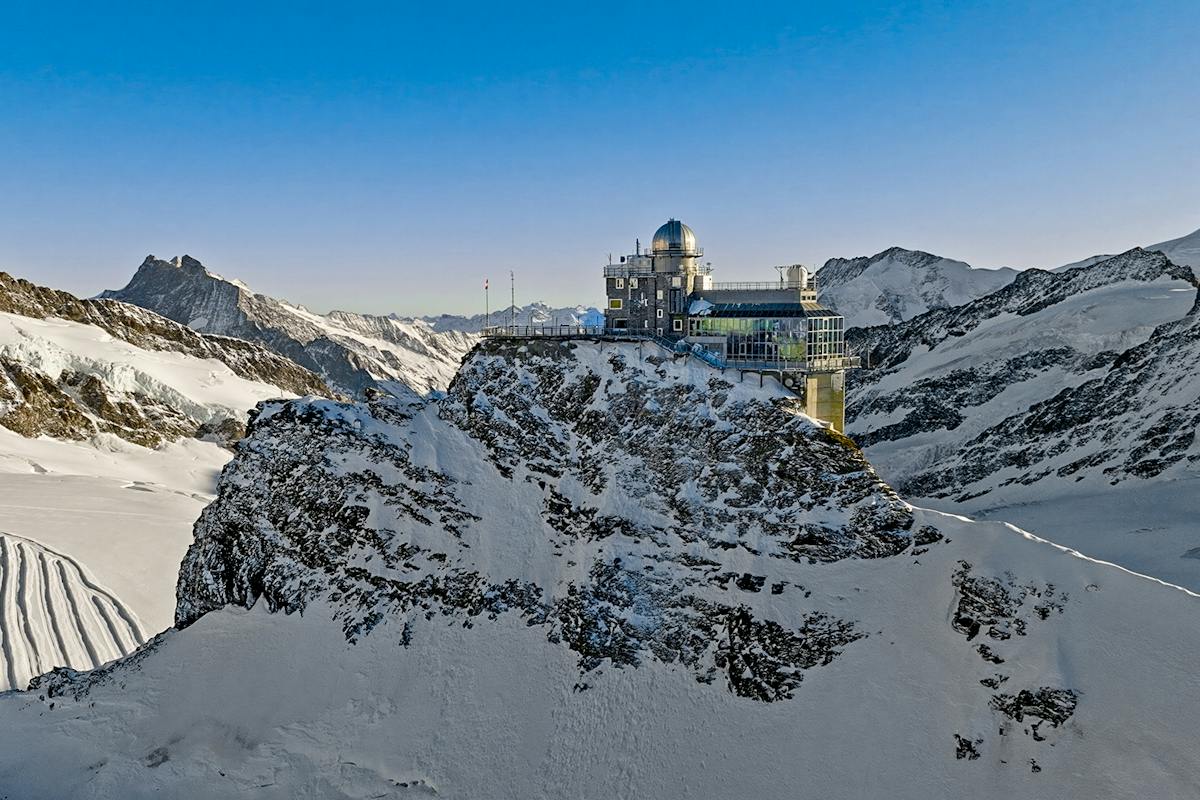
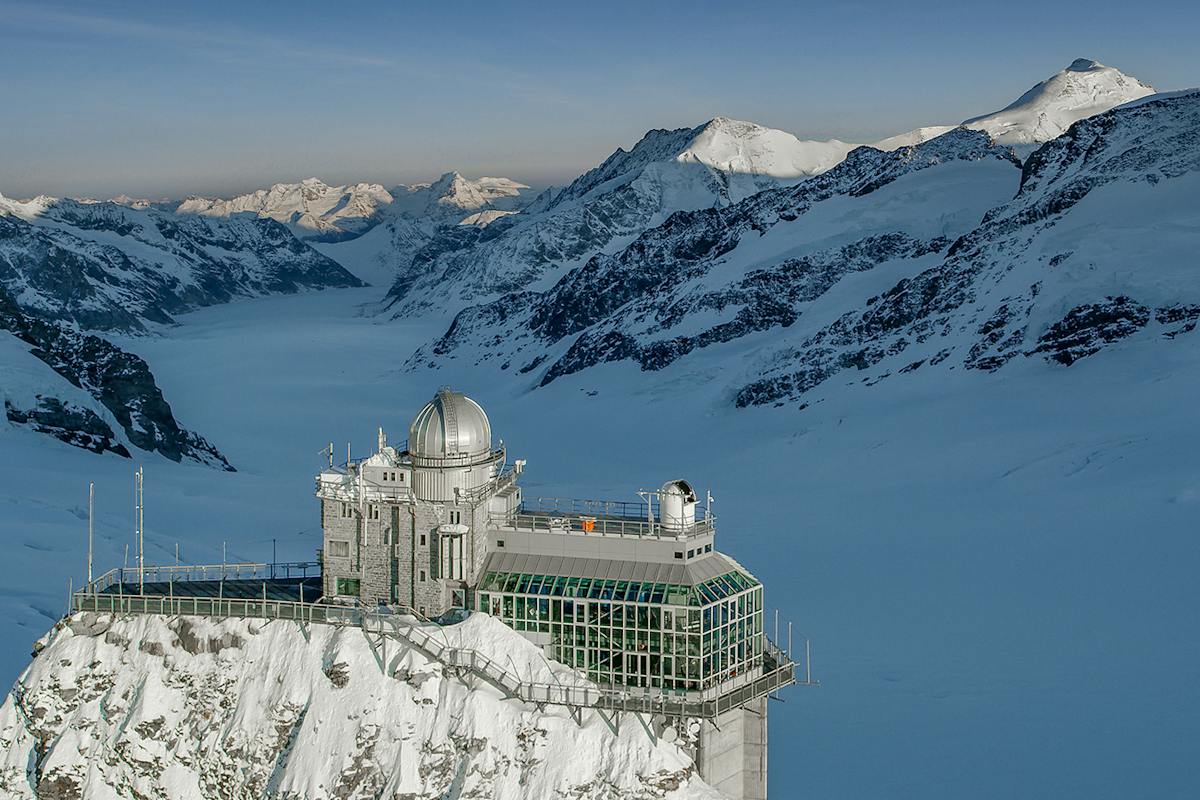
Jungfraujoch weather is the single variable that decides whether a return ticket from CHF 234 buys you the Alps or a wall of grey. The station sits at 3,454 metres, the Sphinx terrace above it at 3,571, and at that height the day you get is not the day the valley gets.
It is not below freezing up there all year round. The MeteoSwiss climate normals for 1991 to 2020 give an annual mean of minus 6.7 degrees Celsius, a February mean of minus 12.6 and an August mean of plus 1.3. The official line is that the hottest months are regularly above the zero degree limit. Snow lies on the Plateau all year, but the air in August is not arctic.
Jungfraujoch weather in numbers: the climate normals
| Period | MeteoSwiss normal, 1991 to 2020 | What it means in practice |
|---|
| Year | Minus 6.7 degrees mean | The average day at 3,454 metres is a cold winter day at home. Plan for cold on any date |
| February, the coldest month | Minus 12.6 degrees mean | Proper winter clothing, covered ears and hands, and short spells outdoors |
| August, the warmest month | Plus 1.3 degrees mean | Around freezing, not far below. A fleece and a windproof jacket over normal clothes |
A monthly mean is an average of every hour, day and night, across 30 years. It does not tell you what the wind will do to it, and it does not promise you a temperature on the day. Spring and autumn sit between the February and August figures, and no one should read the plus 1.3 for August as a forecast for their Tuesday.
What the normals are good for is packing. Anyone who arrives at the top in what they wore in Interlaken in July has made the classic mistake, and gift shop fleeces at 3,454 metres are not a bargain.
Webcams: the Jungfraujoch weather check that saves the day
The Jungfrau Railways run live cameras at the top, and they are the most useful 30 seconds you will spend on the whole trip. Look at them the morning you plan to travel: the forecast one or two days ahead is what decides a free cancellation, the cameras decide the last call on the day. The official Jungfraujoch webcams show the current picture from the summit.
What to look for, in order:
- Can you see the horizon? If the camera shows a defined skyline rather than a flat white field, the terrace will give you something. Flat white means you are inside the cloud.
- Is the cloud below or above? A sea of cloud with peaks sticking out of it is the best case there is, and it often happens on days when the valley is dull and grey. The valley weather is not the mountain weather.
- Is the picture moving? Cameras that refresh will show you whether the cloud is tearing apart or thickening. One still frame is one moment.
- Check more than one camera. A view in one direction can be clear while the other side is closed in.
- Look at the light. Harsh contrast and blue shadow means sunshine, which matters for photographs as much as for the view.
The webcams tell you about now. They cannot tell you about three hours from now, which is why the second half of this strategy matters.
Book early, cancel free: derisking the Jungfraujoch weather
The booking rules are unusually kind to people who book early.
- Every ticket cancels free up to 24 hours before travel. That window is the safety net: book your date now, then confirm or move it right up to 24 hours out if the forecast turns.
- The outbound time slot is chosen at booking. Booking early gives you the widest choice of slots, including the first departures of the day, which are the quietest in summer.
- The reserved return seat is included. It sits about 3 hours after your arrival at the top, on every ticket, with nothing extra to buy.
- There is no bad-weather refund once you have travelled. A white-out is not grounds for anything back, which is exactly why the cancellation window, not a last-minute purchase, is your protection.
Put together, the method is: book your Jungfraujoch date as early as you can for the widest choice of slots, then check the cameras a day or two out and use the free cancellation window if the forecast turns. That beats waiting to book and finding your preferred slot already gone.
Jungfraujoch weather by hour, and how the seasons invert it
In summer the two calm windows are the first connection of the day and the late afternoon. The middle of the day is when the coaches, the day trips and the late risers all arrive at once, and the official FAQ admits waiting times "can exceed 2 hours" at busy moments, with no compensation for a wait.
In winter it works the other way round. Skiers fill the early trains, so a later start is the quieter one. That is worth knowing because winter is also when the air is clearest, and the February mean of minus 12.6 degrees is precisely the trade you are making.
The first connection also has a weather logic behind it in summer: cloud often builds through the day over the high ground, so an early terrace visit can be clear while the same terrace at two in the afternoon is not. Our Jungfraujoch opening hours and timetable page has the seasonal service blocks, and the operator publishes the current state of every line at the official operating information page, which is the place to check before you set off if a maintenance closure or a storm is in play.
What to wear, by season
Jungfraujoch weather asks for layers rather than one heavy coat, and it asks you to treat the sun as seriously as the cold. The Jungfrau Railways medical advice is unambiguous: "There is a considerable risk of snow blindness on the glacier if sunglasses are not worn! This also applies in bad weather, as the UV rays are still present."
| Season | Reference figure | What to wear |
|---|
| Winter, around February | Monthly mean minus 12.6 degrees | Winter coat, hat, gloves, scarf, thermal layer, boots with grip. Keep outdoor spells short and warm up indoors between them |
| Spring and autumn | Between the February and August means | Winter clothing by default. The shoulder months can feel like either end of the range, so overpack rather than under |
| Summer, around August | Monthly mean plus 1.3 degrees | Fleece or jumper, windproof jacket, long trousers, closed shoes, gloves in a pocket. Sandals and shorts are the standard regret |
| Any date | Snow lies on the Plateau all year | Sunglasses, high-factor sunscreen, shoes that grip on snow and ice |
Two other things get forgotten. Cold flattens phone batteries, so keep the phone in an inside pocket between photographs. And at this altitude you lose roughly 200 millilitres of fluid an hour through breathing alone, so drink more than the temperature suggests you need to.
When to stand down
Some days are not worth the fare. If the cameras show flat white at nine in the morning and the Jungfraujoch weather outlook is unchanged by mid-morning, the honest answer is that you will pay full price for the Ice Palace, the Alpine Sensation corridor and a restaurant meal. Those are fine on their own, but not worth the full fare when a clear day is available later in your trip.
The alternative is to go anyway on the argument that you are only here once. That is a real argument, and the operator reckons 85 percent of guests only ever come once. It is also the best reason to use the cancellation window and wait for a clear day. If your dates are fixed and every day looks poor, our honest look at whether Jungfraujoch is worth it sets out the lower mountains that give you a view for a fraction of the money.
How to decide, in four steps
- Hold a cancellable booking. Every ticket we list cancels free up to 24 hours before travel, which is exactly the room this method needs.
- Check the cameras at breakfast. Horizon visible and cloud below you means go. Flat white means wait.
- Match the hour to the season. Summer: first connection or late afternoon. Winter: let the skiers go first and start later.
- Pack for minus figures whatever the month. Sunglasses, gloves, a warm layer and shoes with grip, plus water.
What a poor day still gets you
Not everything up there depends on the sky. The Ice Palace, cut into the glacier and held at a constant minus three degrees, looks identical in a storm. So does the Alpine Sensation, the 250 metre corridor with 30 memorial tablets for the tunnel workers that opened on 30 March 2012. The post office, working since 1912 with its own postcode 3801, the Lindt shop and the restaurants are all indoors.
What a cloudy day costs you is the Sphinx terrace and the Aletsch Glacier, 22 kilometres of ice up to 900 metres thick and the centre of a UNESCO World Heritage site. That is the reason most people make the trip. Before you commit to a date, our Jungfraujoch ticket prices page shows what each route and pass combination actually costs, so you know the size of the bet you are placing on the sky.
 Bestseller